Why Connector Pins Fail: Common Causes in MRI Systems
Connector reliability is critical in MRI systems, especially in cable assemblies and coil connections where stable electrical performance is required.
However, in real-world applications, connector pin failures are relatively common — and in many cases, the issue can be traced back to the contact design, usage conditions, or wear over time.
Understanding why connector pins fail can help reduce downtime and improve maintenance efficiency.
🔍 Common Types of Connector Pin Failures
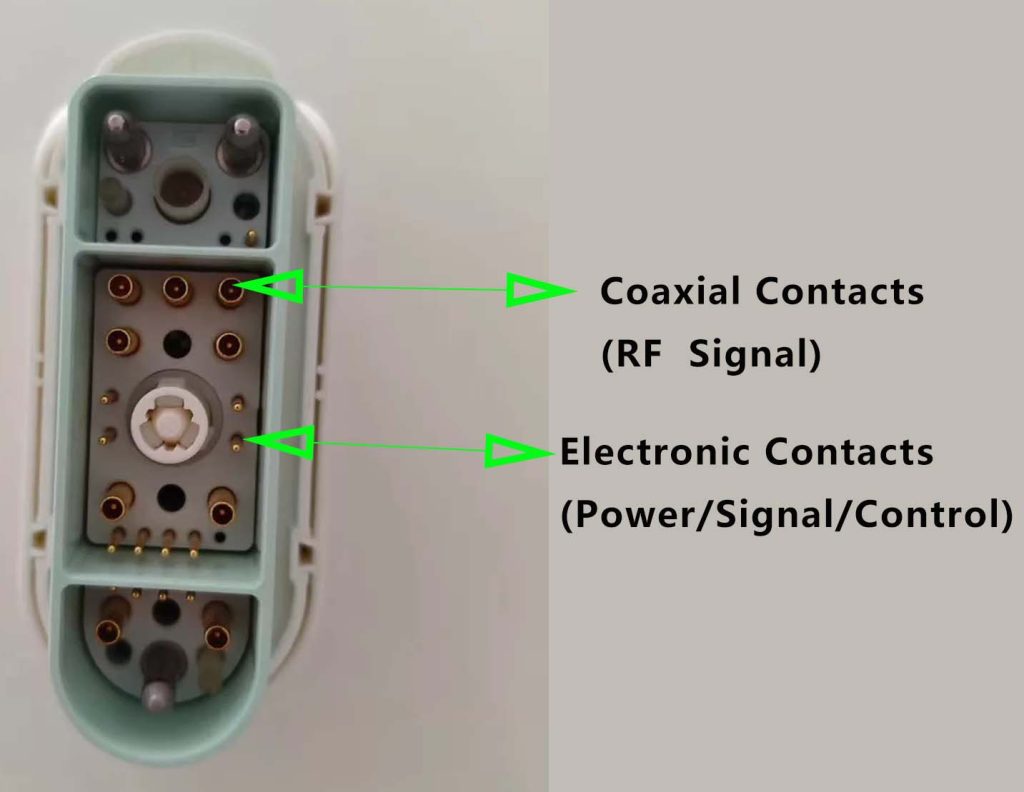
In MRI systems, both coaxial contacts (RF) and electrical contacts are used.
While their functions differ, their failure modes often share similar root causes.
Typical failures include:
- Loss of contact force
- Surface wear or plating damage
- Oxidation or contamination
- Local overheating
- Mechanical deformation
1. Loss of Contact Force (Most Common Issue)
This is especially common in slotted (stamped & formed) socket contacts.
Over repeated mating cycles:
- Contact beams gradually lose elasticity
- The socket opening may become enlarged
- Contact pressure decreases
👉 Result:
- Unstable electrical connection
- Intermittent signal or power issues
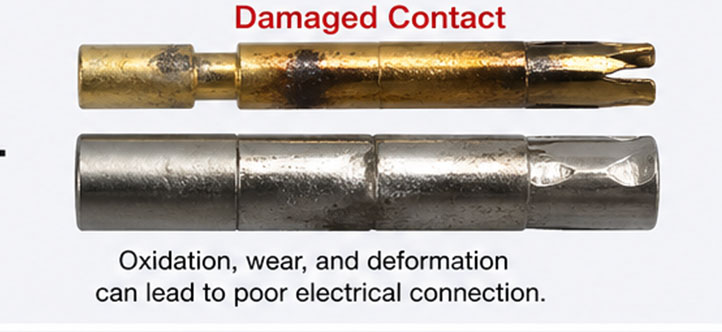
⚠️ 2. Surface Wear and Plating Degradation
Connector pins rely on surface plating (often gold or similar coatings) to ensure good conductivity.
During repeated insertion and removal:
- Plating layers wear off
- Base material becomes exposed
- Friction increases
👉 Result:
- Increased contact resistance
- Reduced signal stability
- Shorter service life
⚠️ 3. Oxidation and Contamination
In MRI environments, connectors may be exposed to:
- Humidity
- Dust
- Residual chemicals from maintenance
Over time:
- Oxidation forms on contact surfaces
- Contaminants reduce conductivity
👉 Result:
- Poor electrical performance
- Intermittent failures
⚠️ 4. Overheating in Electrical (Non-Coaxial) Contacts
Electrical contacts used for power or control circuits are more susceptible to thermal issues.
Causes include:
- Insufficient contact force
- High current load
- Poor crimping quality
👉 Result:
- Localized heating
- Oxidation acceleration
- In severe cases, contact burning
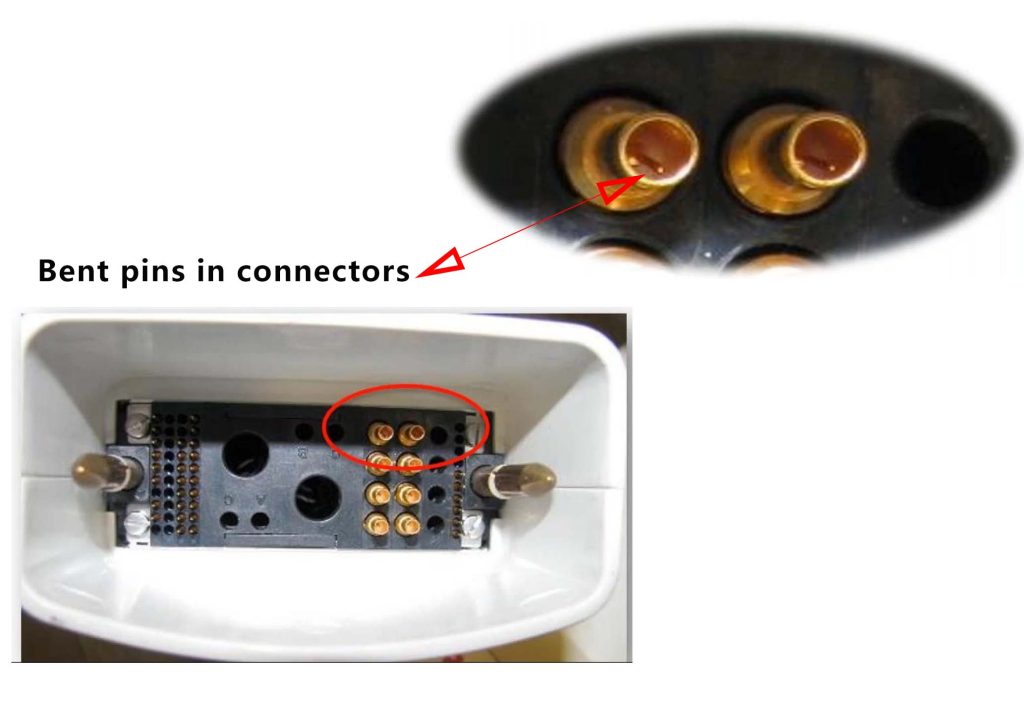
⚠️ 5. Mechanical Damage and Misalignment
Improper handling during assembly or maintenance can lead to:
- Bent pins
- Deformed socket structures
- Misalignment during mating
👉 Result:
- Permanent damage
- Poor mating interface
- Increased wear
🆚 Machined vs Stamped Contacts: Impact on Reliability
Connector contacts are typically manufactured in two main types:
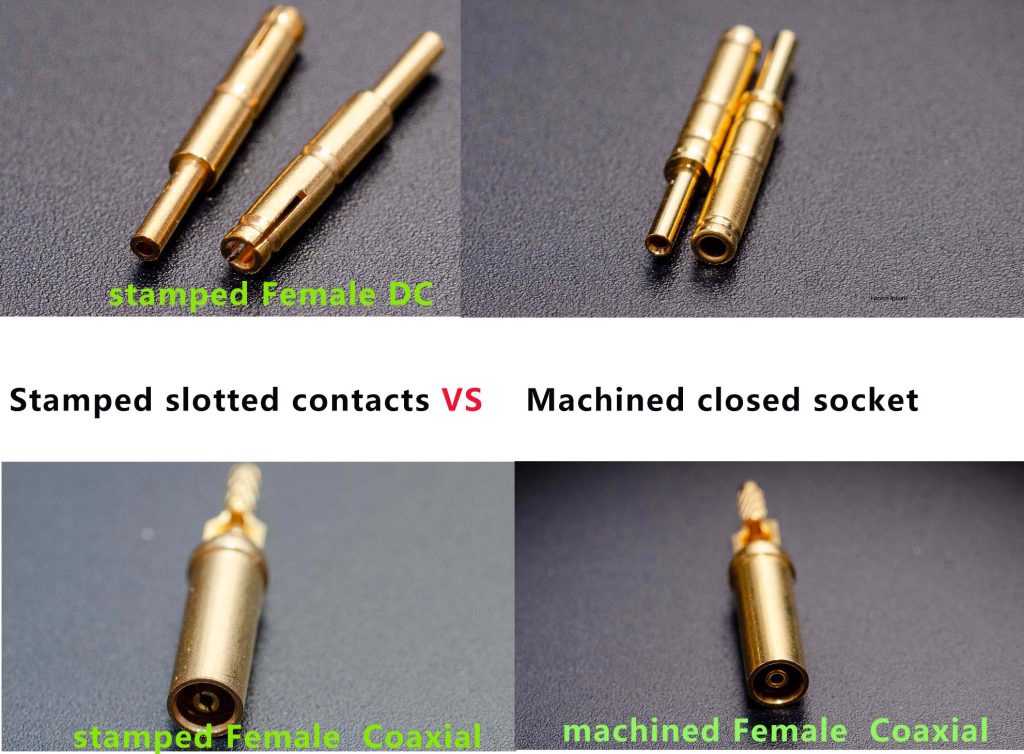
Machined Contacts (Closed Socket / Solid Pin)
- One-piece precision structure
- Higher consistency
- Better resistance to wear and deformation
👉 Generally more durable in high-reliability applications
Stamped & Formed Contacts (Slotted / Crimp-Style)
- Multi-beam or slotted structure
- More flexible and cost-effective
- More sensitive to fatigue and deformation over time
👉 More prone to contact force loss under repeated mating
🧠 Why Contact-Level Repair Is Often Enough
In many MRI repair scenarios:
👉 The connector housing is still functional
👉 Only a few contacts are damaged or degraded
This means:
- Full connector replacement is unnecessary
- Targeted contact replacement is more efficient
🔧 A Practical Maintenance Approach
Instead of replacing entire connectors, many technicians choose to:
- Identify failed contacts
- Replace only the damaged pins or sockets
- Restore functionality with minimal downtime
👉 Related Solution
If you’re dealing with connector failures in MRI systems and considering contact replacement:
➡️ See our solution:
MRI Connector Contact Repair Solutions
(This page explains available contact types and how to replace them effectively.)
📩 Need Help Identifying a Contact?
If you’re unsure about:
- Contact type (machined vs stamped)
- Coaxial vs electrical
- Socket vs pin structure
You can share photos or samples for evaluation.
We’ll help you identify a suitable replacement solution.
✅ Summary
Connector pin failures in MRI systems are usually caused by:
- Loss of contact force
- Surface wear
- Oxidation
- Thermal stress
- Mechanical damage
Understanding these factors makes it easier to diagnose issues and choose the right repair strategy.
In many cases, replacing only the contacts — not the entire connector — is the most efficient solution.