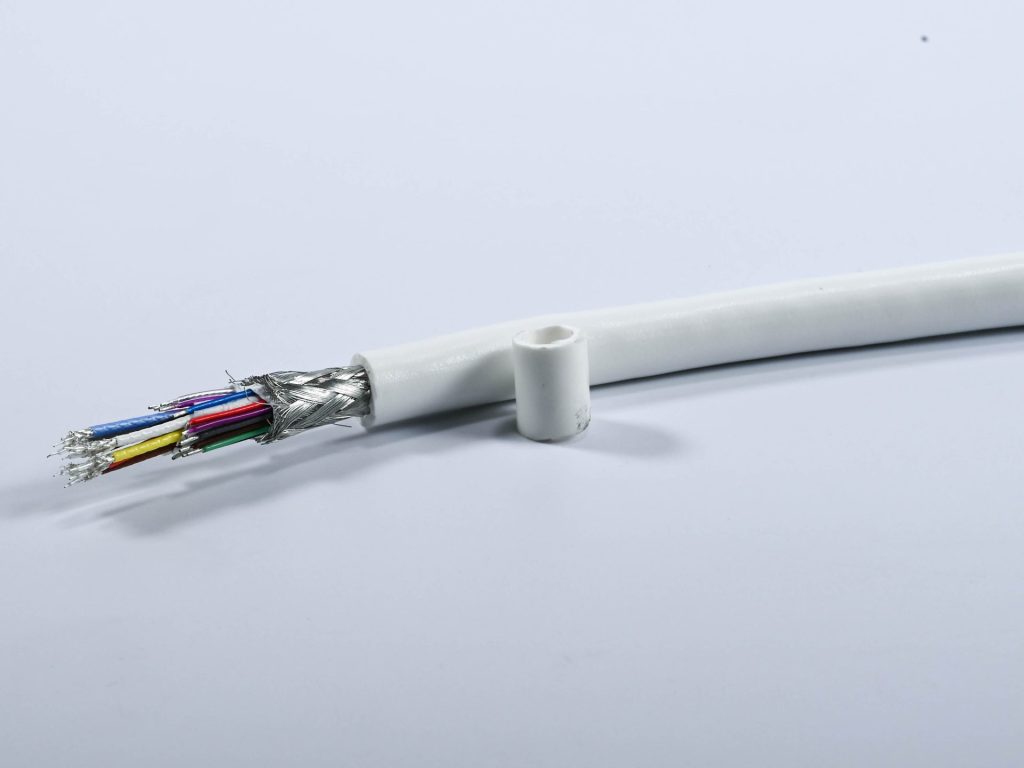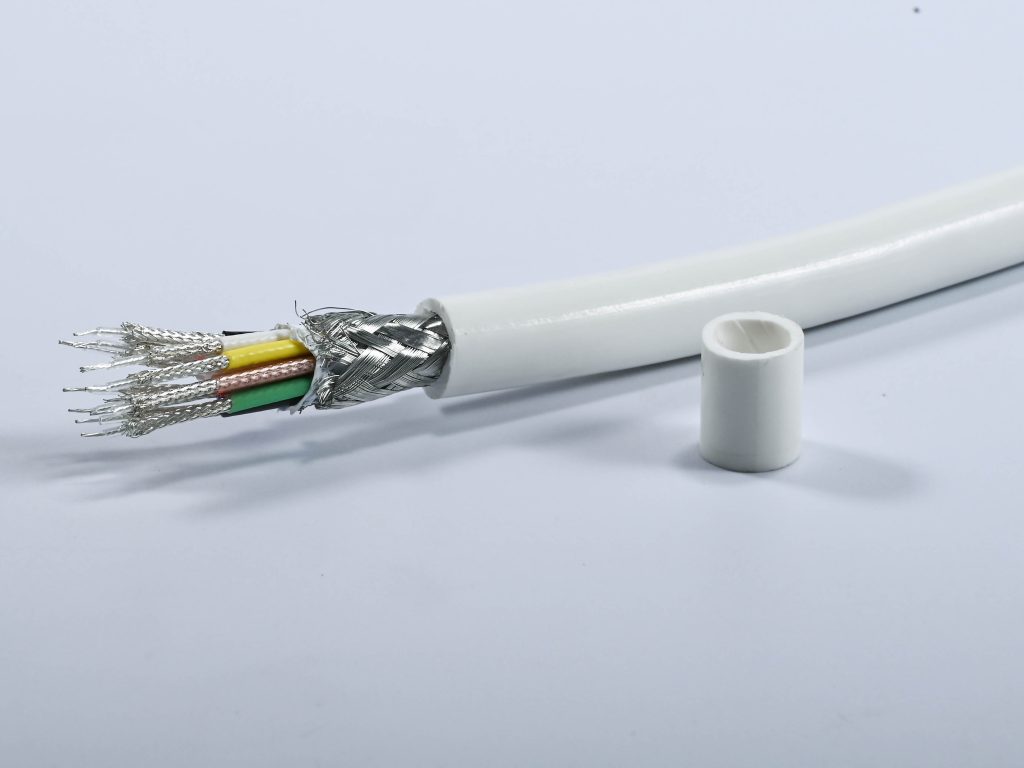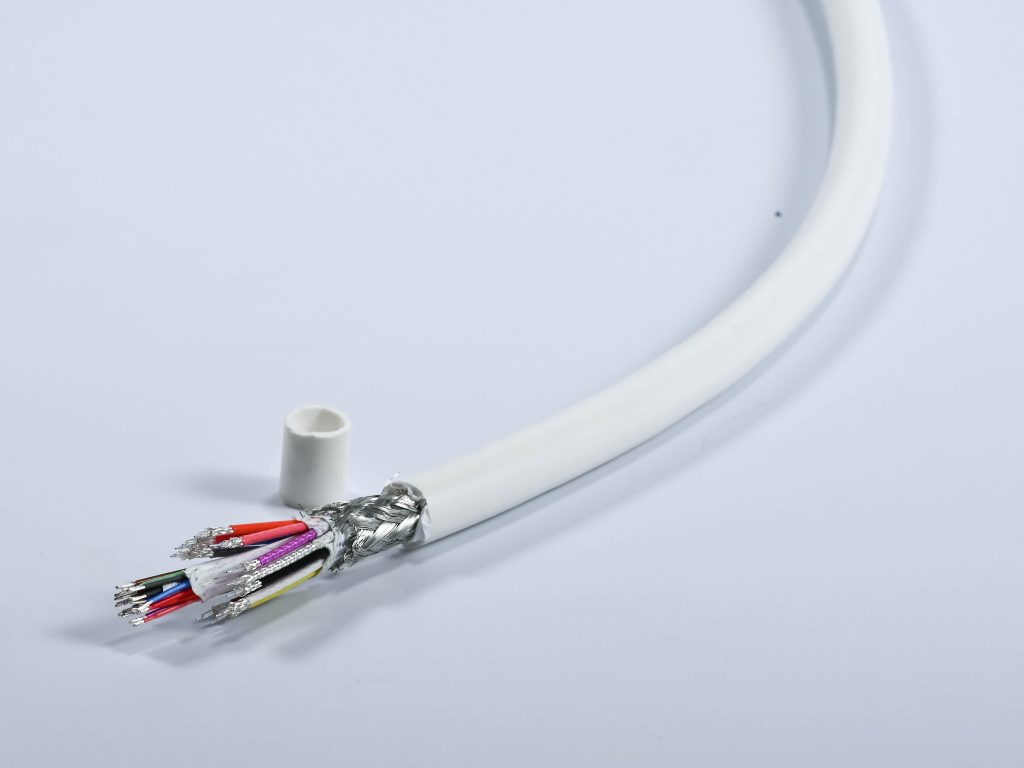
This guide is widely used by MRI coil repair technicians.
MRI coil cables are one of the most common failure points in MRI coils.This technical guide explains the typical causes of cable failure,repair methods, compatible materials, and replacement solutions for Siemens/Philips/GE MRI systems.
Common MRI Coil Cable Failures
MRI coil cables operate in demanding environments and are subject to repeated bending, mechanical stress, and long-term use. Over time, these factors may lead to cable degradation or failure, which can affect signal quality and coil performance.
The most common MRI coil cable failures include:
- Cable insulation cracking:Repeated flexing or aging of the cable jacket can cause cracks in the insulation layer. This may expose the internal conductors and increase the risk of signal interference or electrical faults.
- Shielding damage:MRI systems require highly effective electromagnetic shielding. Damage to the shielding layer can introduce noise into the signal path, reducing image quality and potentially affecting diagnostic accuracy.
- Connector pin breakage:Frequent connection and disconnection can cause connector pins to bend, loosen, or break. Poor contact at the connector interface is a common source of intermittent signal problems.
- Signal noise issues:Continuous bending near strain relief points may cause internal conductors to fracture. These failures are often difficult to detect externally but may result in unstable or lost signals.
- Strain relief failure:Strain relief components protect the cable from excessive mechanical stress. When these components fail, stress is transferred directly to the cable structure, accelerating cable damage.
- Understanding these common failure modes can help technicians diagnose coil problems more efficiently and determine whether repair or cable replacement is required
MRI Coil Cable Repair Methods
Depending on the type and severity of the damage, several repair methods may be used to restore the functionality of an MRI coil cable.
Localized cable repair
If damage is limited to a small section of the cable, technicians may remove the damaged portion and reconnect the conductors using appropriate shielding and insulation techniques.
Connector replacement
When connector pins or housings are damaged, replacing the connector assembly can often restore stable signal transmission.
Cable section replacement
In cases where multiple conductors or shielding layers are compromised, replacing the entire cable section may be the most reliable solution.
Complete cable replacement
If the cable has extensive damage or aging-related degradation, installing a new MRI-compatible cable is often the safest long-term solution.
Proper repair procedures should always ensure that shielding integrity, electrical continuity, and mechanical durability are maintained to preserve MRI system performance.
MRI Compatible Cable Requirements
MRI coil cables must meet strict technical requirements to ensure reliable signal transmission and safe operation in a high electromagnetic field environment.
Important design considerations include:
Low-noise shielding structure
Effective shielding is essential to prevent electromagnetic interference and maintain signal integrity during imaging procedures.
High flexibility
MRI coil cables are frequently moved and bent during patient positioning. Flexible cable structures help reduce mechanical stress and extend service life.
Medical-grade insulation materials
Cable insulation should use materials suitable for medical environments, offering durability, chemical resistance, and long-term stability.
Reliable connector interfaces
Precision connectors ensure consistent electrical contact and minimize signal loss.
Compatibility with MRI system configurations
Cable structures and materials must be compatible with specific MRI coil designs and system requirements.
In many repair or replacement scenarios, custom MRI compatible cables may be required to match the original coil configuration.
What You Will Learn in This Guide
This technical guide provides practical information for MRI coil maintenance professionals and repair technicians.
Inside the PDF guide, you will learn about:
- Typical MRI coil cable structures and components
- Common failure mechanisms in MRI coil cables
- Basic repair approaches used in coil servicing
- Recommended materials for MRI compatible cable replacement
- Key considerations when selecting replacement cables
The guide is designed to help technicians better understand cable-related issues and support more effective coil maintenance and repair decisions.
FAQ
What causes MRI coil cable failure?
MRI coil cable failure is often caused by repeated mechanical bending, aging of insulation materials, or damage to shielding layers. Connector wear and internal conductor fatigue can also contribute to signal instability.
Can MRI coil cables be repaired?
In many cases, localized cable damage or connector problems can be repaired. However, when the internal cable structure or shielding has been severely compromised, replacing the cable may provide a more reliable solution.
What cable materials are MRI compatible?
MRI compatible cables often use flexible insulation materials, precision shielding structures, and high-quality conductors to maintain signal integrity while supporting frequent movement and handling.
How do technicians diagnose MRI coil cable problems?
Technicians typically inspect cable insulation, connectors, and shielding layers. Electrical continuity testing and signal analysis may also be used to determine whether the cable requires repair or replacement.
When should an MRI coil cable be replaced?
Replacement is recommended when the cable has extensive insulation damage, shielding degradation, or internal conductor failure that cannot be reliably repaired.
Need Custom MRI Compatible Cables?
In some situations, standard replacement cables may not fully match the original MRI coil configuration. Custom cable manufacturing may be required to ensure proper compatibility and performance.
Our team provides customized cable solutions for specialized medical and imaging applications, including:
- Custom MRI compatible cables
- Flexible medical-grade cable assemblies
- Coil repair cable components
- Silicone and high-performance cable materials
If you are working on MRI coil repair or cable replacement projects, feel free to contact us to discuss your requirements.