
8 Litz Wire Constructions and Design Options
Welcome to our Litz Wire Technical Directory. Engineered to minimize skin effect and proximity effect losses at high frequencies, our custom-stranded litz wires are tailored for high-efficiency transformers, wireless charging coils, medical RF equipment, and power electronics. Browse our standard constructions and download detailed PDF specification sheets below
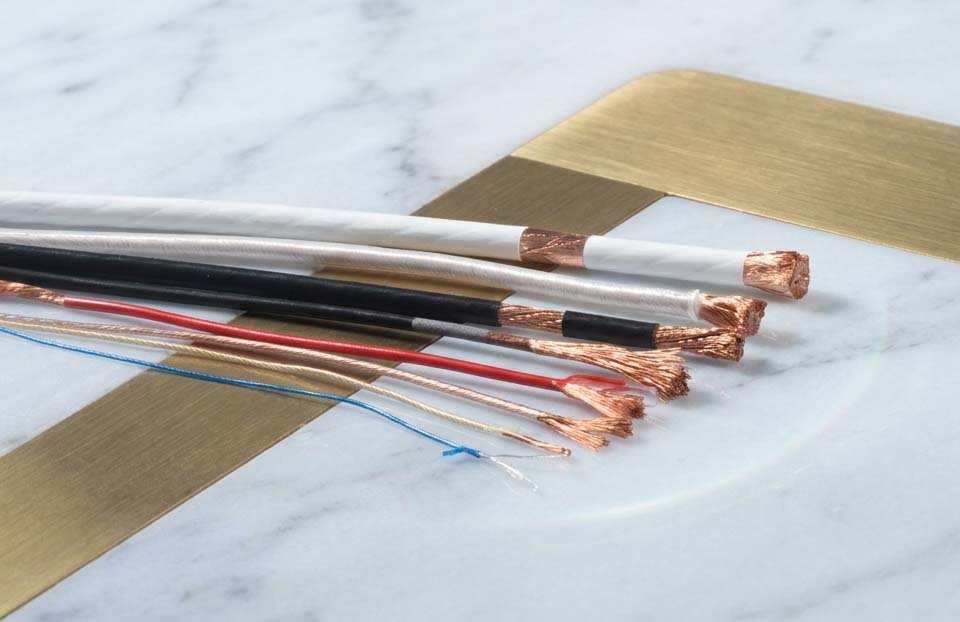
8 types Litz wire overview
Type 1: Single-Stage Litz Wire — Basic stranded construction for high-frequency windings and transformers.
Type 2: Multi-Stage Litz Wire — Multiple stranding stages designed to optimize strand transposition and reduce AC resistance.
Type 3: Braided or Served Litz Wire — Braided conductor construction or optional textile serving (Silk/Nylon) for high mechanical flexibility.
Type 4: Rectangular Litz Wire — Formed square/rectangular cross-section to maximize winding-window space utilization.
Type 5: High-Current Litz Wire — Engineered with larger copper cross-section and enhanced dissipation for high-power circuits.
Type 6: Fine-Strand Litz Wire — Super-fine individual strands (40AWG–50AWG) selected for MHz-range high-frequency loss reduction.
Type 7: Shielded Litz Wire — Integrated conductive shielding (braid or foil) for applications requiring strict EMI/EMC control.
Type 8: Special-Insulation Litz Wire — Custom outer jacket options (FEP, TPU, Polyimide) engineered for high voltage, temperature, or harsh environments.
Litz Wire General Technical Specifications
| Technical Parameter | Standard Capabilities & Range |
|---|---|
| Single Strand Gauge | 40 AWG (0.08mm) down to 50 AWG (0.025mm) |
| Operating Frequency Range | 10 kHz to 5 MHz+ (Frequency-matched strand selection) |
| Insulation Film Types | Polyurethane (UEW), Polyesterimide (EIW), Polyimide (AIW) |
| Outer Serving / Jacket | Natural Silk, Nylon Serving, FEP, TPU, Extruded Polyimide Tape |
| Cross-Section Geometries | Round, Square, Profiled / Compacted Rectangular |
Disclaimer / Custom Guide
Note: Litz wire selection depends heavily on operating frequency, thermal limits, and voltage ratings. If you require specialized insulation or custom strand combinations for medical RF or automotive standards, please submit your parameters for engineering review.
FAQ
Why is Litz wire preferred over solid copper wire at high frequencies?
At high frequencies, alternating current (AC) tends to flow near the outer surface of a conductor due to the skin effect and proximity effect, increasing resistance and heat. Litz wire utilizes multiple individually insulated strands twisted together, forcing the current to distribute evenly and drastically reducing AC power losses.
How do I select the right individual strand gauge (AWG) for my operating frequency?
The individual strand thickness must be smaller than the skin depth at your target operating frequency. For example, 40 AWG (0.08mm) is commonly optimized for frequencies up to 200 kHz, while ultra-fine 46 AWG to 50 AWG strands are required for MHz-range high-frequency transformers and medical RF coils.
What is the primary advantage of Type 4 Rectangular Litz Wire?
Type 4 Rectangular (Profiled) Litz wire undergoes precise mechanical compaction to form a square or rectangular cross-section. This eliminates inter-strand air gaps, maximizing the copper fill factor in the transformer winding window and improving overall thermal dissipation.
Can I order custom strand counts or non-standard outer insulation?
Yes, over 80% of our production involves fully custom Litz wire constructions. You can specify the required strand count, single strand gauge (40AWG–50AWG), and outer serving or jacket material (such as Natural Silk, Nylon, FEP, TPU, or Polyimide tape) based on your space constraints and thermal requirements.
Need a Custom Litz Wire Construction?
If our standard specifications don’t match your exact operating frequency, spatial footprint, or temperature class, let our engineering team build a tailored solution. Over 80% of our production is fully customized for high-frequency transformers, medical devices, and power electronics.
Get free sample feasibility feedback and an engineering review within 24 hours.